
Recycling of Rejects.
Manufacturers can get more out of porous silicon
DECKER-Anlagenbau — a specialist in wet-chemical processes — has launched a silicon purification system onto the market that can be used to treat porous silicon that is difficult to clean. The cleaned silicon is then suitable for the production of high-performance solar cells and can be marketed with correspondingly higher yields.
Despite good long-term forecasts, the solar industry currently has to bridge a period of low prices. Calculations are correspondingly tough. Companies are therefore investing heavily in the development of efficient processes for all stages of the process chain. For silicon manufacturers, upgrading impure silicon to high-quality solar silicon offers an opportunity to increase yields.
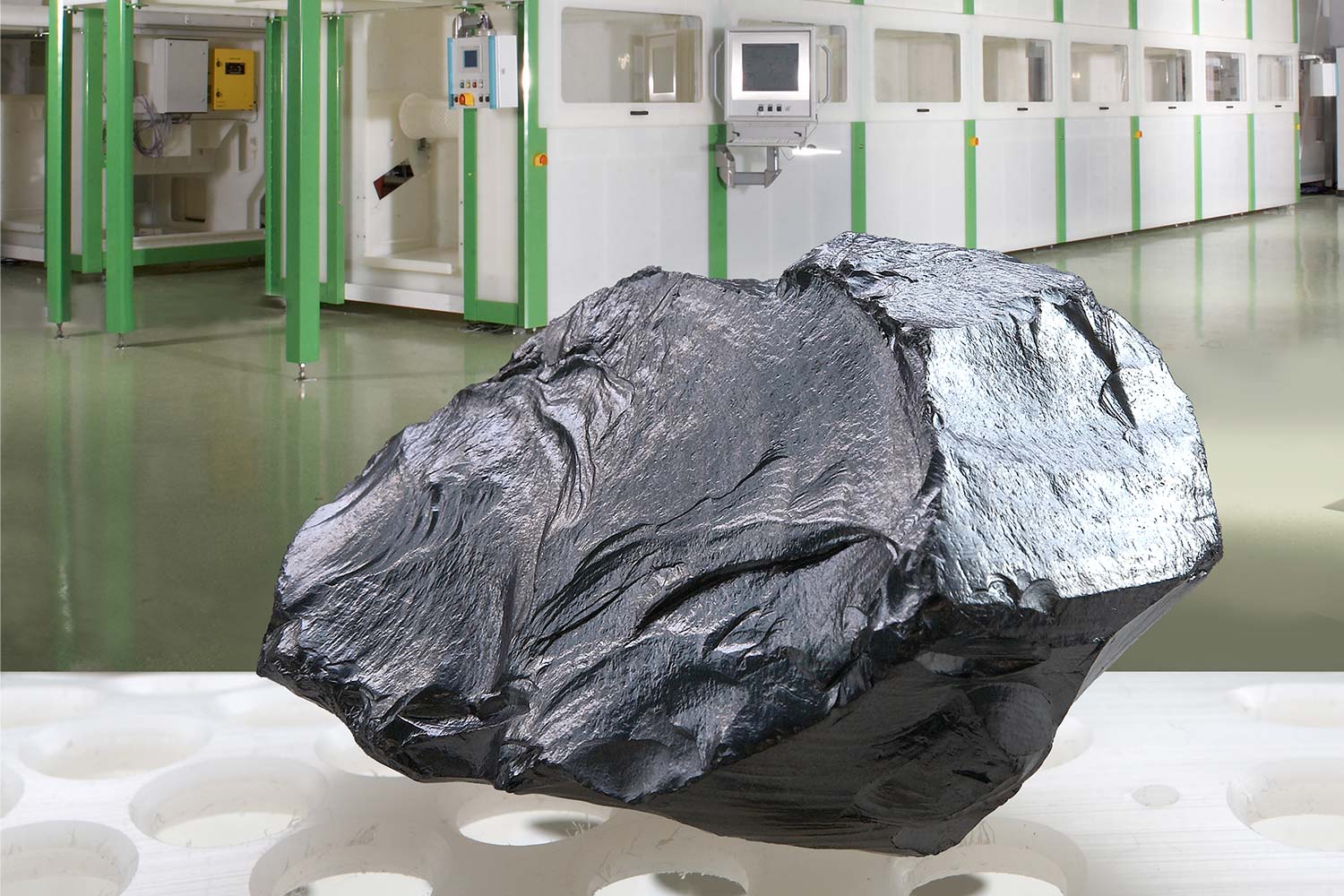
Silicon with a lower degree of purity is created in the edge areas of the crystal during the production of high-purity silicon. During crystal growth, dendrite formation occurs at the edge areas, an undesirable disruption of the crystal structure and possibly the deposition of metals, carbons or other substances on this fissured surface. These are undesirable structures that can occur both in the Fluidized Bed Reactor FBR and in the Siemens process. The addition of metals is known to lead to a lower minority carrier lifetime, which reduces the efficiency of the solar silicon. Other causes of silicon contamination on the surface and just below are the rapid diffusion of metal atoms such as nickel or copper into the silicon at room temperature and contamination during transportation, crushing, storage and packaging.
Material contaminated in this way achieves lower prices due to its lower quality. High-purity silicon has a purity level of 10 ppb(w) in relation to the metal content and charge carrier lifetimes of 10,000 nanoseconds. The requirements for PV silicon are lower, but are continuously increasing.
Contaminated material can be upgraded through appropriate cleaning. A higher degree of purity also has a positive effect on the performance of CZ pullers, for example. However, cleaning porous silicon chunks is a complex task due to the complicated popcorn-like surface of the material. The material has cracks, fissures and fissures and therefore has a very large surface area that is difficult to reach with cleaning media. Rinsing and drying materials with such furrowed surfaces is just as challenging.
Goal: High throughput at low cost
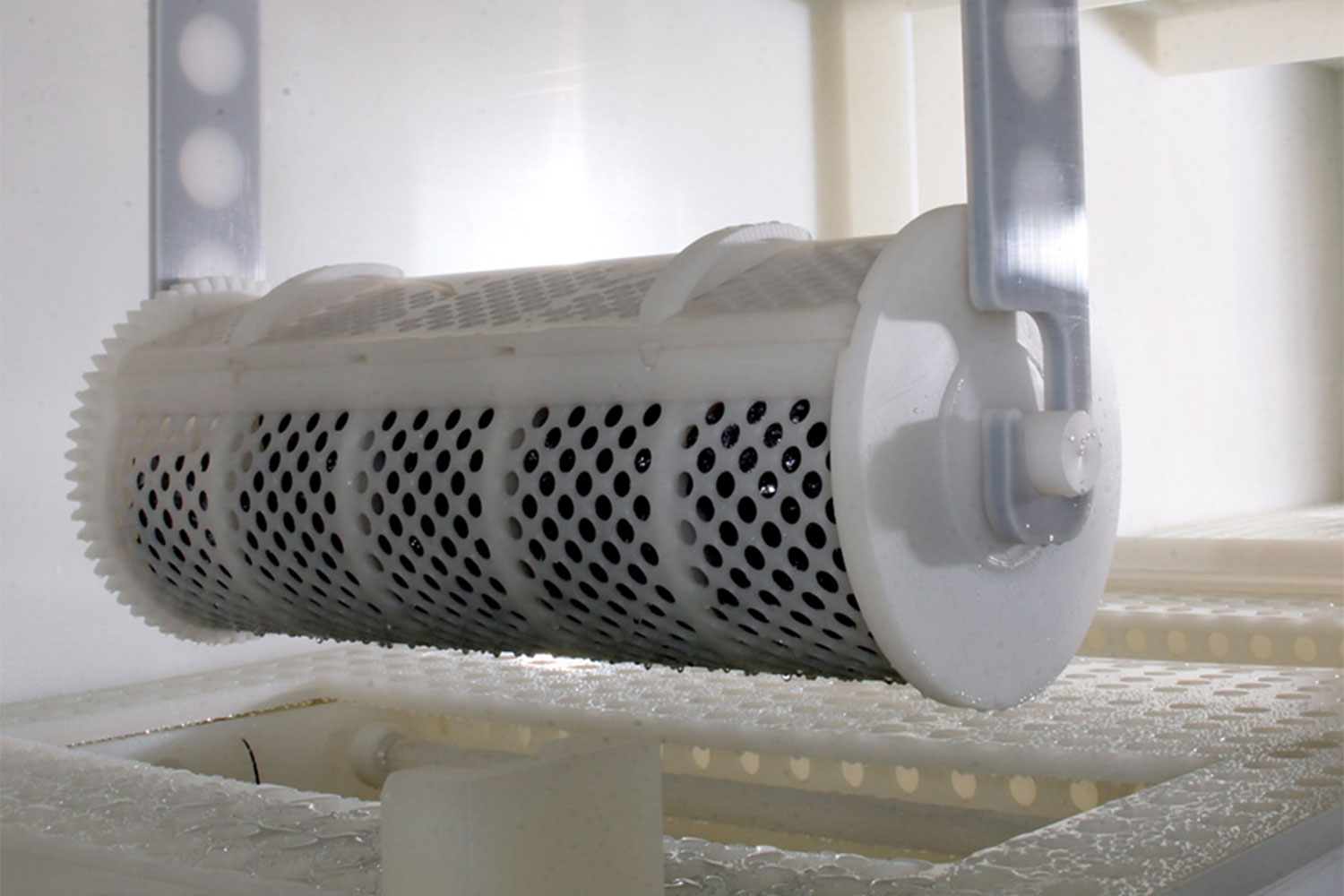
Wet-chemical processes with both alkaline and acidic cleaning media or combined processes are suitable for silicon cleaning. The material to be cleaned is portioned and moved horizontally and vertically in rotating baskets or drums.
A fully automated process is required for the silicon as it passes through the wet-chemical cleaning process. But how can it be ensured that the crevices and cracks are also cleaned and rinsed as required? How can a drying process be designed that simultaneously allows a high material throughput at competitive costs?
Fast cleaning of porous silicon down to the ppbw range
DECKER solves these issues by transferring the cleaning process to a conveyor belt. The silicon chunks are granulated to allow access to the surfaces hidden in cracks and crevices. The respective medium is sucked by vacuum through a defined field on the belt on which the silicon lies. In this way, the process solves quality and efficiency problems inherent in the classic process, as etching processes inside baskets take longer and are less precise than on their exposed surfaces. The costs for belt filters depend on various parameters — amortization times of around one year can be achieved under certain conditions.
This is groundbreaking in various respects. The belt filter variant has a positive effect on many process parameters: It saves costs and time. Savings in energy and chemicals have a positive impact on the environment. The most important advance, however, is that the technology has opened up the possibility of using it on an industrial scale. Last year, the process received the Innovation Award at the Intersolar trade fair. The purified silicon has a purity level of 6N and better, depending on the bulk quality.
The optimization of systems to increase production while reducing costs is of great importance for the future of solar companies. The silicon granulate etching system with belt filter now enables manufacturers to upgrade porous, contaminated silicon quickly and cost-effectively.